
Your CRM Is Still the Source of Truth. AI Is Not a Replacement Strategy
By: Stacey Segal, COO
AI is changing what nonprofit teams can do with their data. It can summarize complex histories, identify patterns, draft donor communications, flag activity, support segmentation, recommend cleanup, augment data, and help staff move faster. For organizations with limited time and growing expectations, that is a major opportunity.
But AI should not be confused with a replacement strategy for your CRM, your Lakehouse, or your broader data ecosystem.
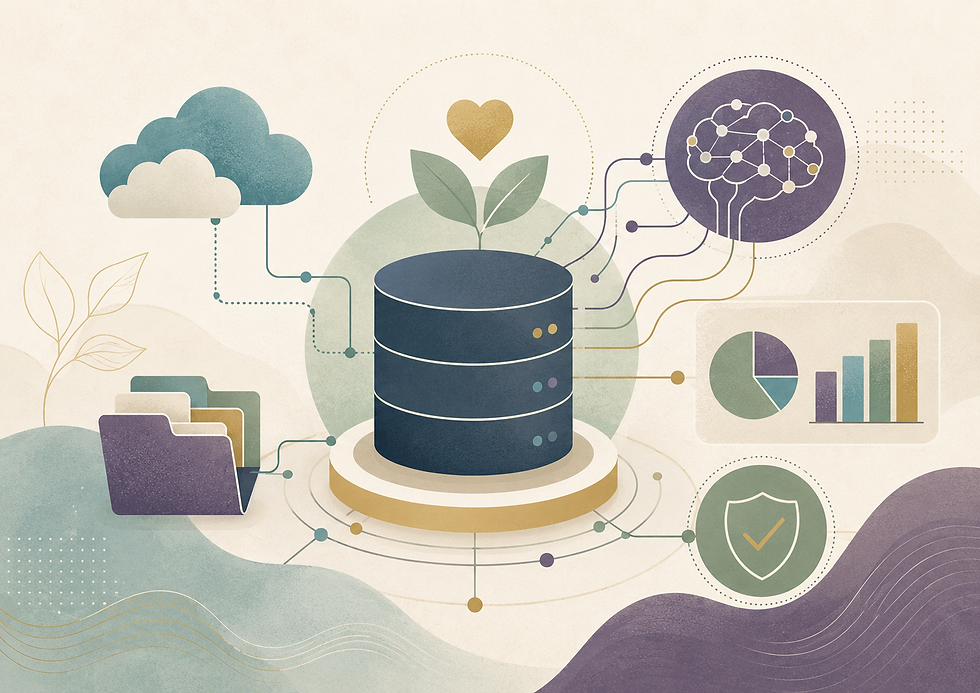
For many nonprofits, the CRM has historically been the primary source of truth. It holds constituent records, gift history, actions, relationships, campaigns, preferences, memberships, events, opportunities, and stewardship activity. It gives fundraising, operations, marketing, and leadership teams a structured way to understand what has happened and what needs attention.
That foundation still matters.
At the same time, the definition of “source of truth” is evolving. Many organizations now rely on multiple systems to support fundraising, marketing, finance, digital engagement, analytics, and operations. Increasingly, platforms like Databricks and modern Data Lakehouses are becoming trusted sources of truth for data spanning multiple systems.
That does not make the CRM less important. It means nonprofits need to be clearer about which system is authoritative for which data.
AI can help interpret information across these systems. It can make data easier to access, summarize, and act on. But AI should not become the unofficial place where truth lives.
This distinction matters because AI tools can make information feel more complete than it really is. A well-written summary can sound authoritative even when it is based on incomplete records. A recommendation can appear confident even when the underlying data is duplicated, outdated, or missing key context. A chatbot can answer quickly, even when the underlying system logic is unclear.
That is not an AI failure. It is a data strategy failure.
For nonprofits, the risk is not simply that AI gets something wrong. The bigger risk is that teams start making decisions based on outputs they cannot trace, govern, or explain.
When a fundraiser sees an AI-generated donor summary, they should understand where the information came from. When a marketing team receives a recommended audience segment, they should know which data points influenced it. When leadership sees an AI-assisted forecast, they should understand the assumptions underneath it.
Those questions lead back to the CRM, the Lakehouse, and the broader data ecosystem around them.
A strong data strategy gives AI something reliable to work with. It defines where key information belongs, who owns it, how it is updated, which systems are authoritative, and how data moves between platforms. It also gives teams a shared language for understanding constituents, engagement, giving, activity, and outcomes.
Without that foundation, AI becomes another layer of confusion.
This does not mean nonprofits should wait until their data is perfect before using AI. Perfect data is not realistic. But organizations do need to understand what data they trust, what data needs cleanup, which systems should be treated as authoritative, and which decisions require human review.
AI is most valuable when it builds on strong systems of record and a clear data strategy, not when it works around weak ones.
The future of nonprofit technology is not CRM versus Lakehouse versus AI. It is CRM, Lakehouse, and AI working together with clear governance. The CRM remains essential for relationship and operational history. The Lakehouse can help unify and prepare data across systems. AI can surface insights, reduce manual work, improve access to information, increase automation, and help teams act with more confidence.
Replacing your CRM with AI is not the strategy.
Strengthening your CRM and your broader data strategy so AI can actually help is.


Comments